Nonprofit Budgeting for Restricted Funds in Canada
A nonprofit budget is not one number. It is a set of commitments, each tied to a fund, a funder, or a program, and each with its own rules about how the money can be spent.
 Call us: 1 (877) 448-9895


A nonprofit budget is not one number. It is a set of commitments, each tied to a fund, a funder, or a program, and each with its own rules about how the money can be spent.

Choosing nonprofit accounting software is rarely a features contest. Most packages can post a journal entry and print a statement. The difference shows up when a funder asks how a restricted grant was spent, or when your board wants a report by Thursday and finance needs until the end of the month.

Annual budgets go stale fast. You build the year's numbers around what you know today, and by the third quarter, the conditions you planned around have already changed. That's the gap adaptive planning is meant to close, and it's exactly what the Planning module inside Sage Intacct is built to do.

If it feels harder than ever to find good financial help, you are not imagining it.
Robert Half's 2026 Canada research found that 59% of finance and accounting leaders say skills shortages have already caused project delays this year. It tracks with what I hear directly: finance team labour shortages are real, and they're hitting construction, nonprofit, and First Nations organizations across Western Canada right now.

On January 20, 2026, Prime Minister Mark Carney addressed the World Economic Forum in Davos with a speech he called "Principled and Pragmatic: Canada's Path." The core message was about a rupture in the rules-based international order, and the need for countries like Canada to build strategic autonomy in response.
What stood out to me wasn't the diplomacy. It was the implication for the years ahead. When the rules that have governed trade, alliances, and economic stability start breaking down, the result is a longer stretch of unpredictability, not a short-term disruption. Carney was describing a world where volatility becomes the operating condition, not the exception.

Canada's Bill 198, officially known as Keeping the Promise for a Strong Economy Act (Budget Measures), transformed how companies manage and report their finances in Canada.

Successfully implementing change in an organization or business is one of the most critical challenges facing mid-level managers today.
You’ve probably heard about the advantages of using cloud technologies and how they’re particularly useful for financial management with improved accessibility, flexibility, and collaboration. You may also feel cautious about adopting cloud tools when it means moving away from traditional accounting systems.
A peer-reviewed study, recently published in Humanities and Social Sciences Communications by Giang Nguyen Phu of Thuongmai University, shared interesting insights about the shift. The study used data from 172 businesses in Vietnam’s stock exchange and explored how these companies decided to adopt cloud technology for financial management.

When your organization has invested in a Sage product, you want to get the most out of your software. Whether you’re new to Sage or already using one of their products like Sage Intacct or Sage 300 for your financial management system, it’s important to understand the different types of support and training available to you that can help you work more efficiently.
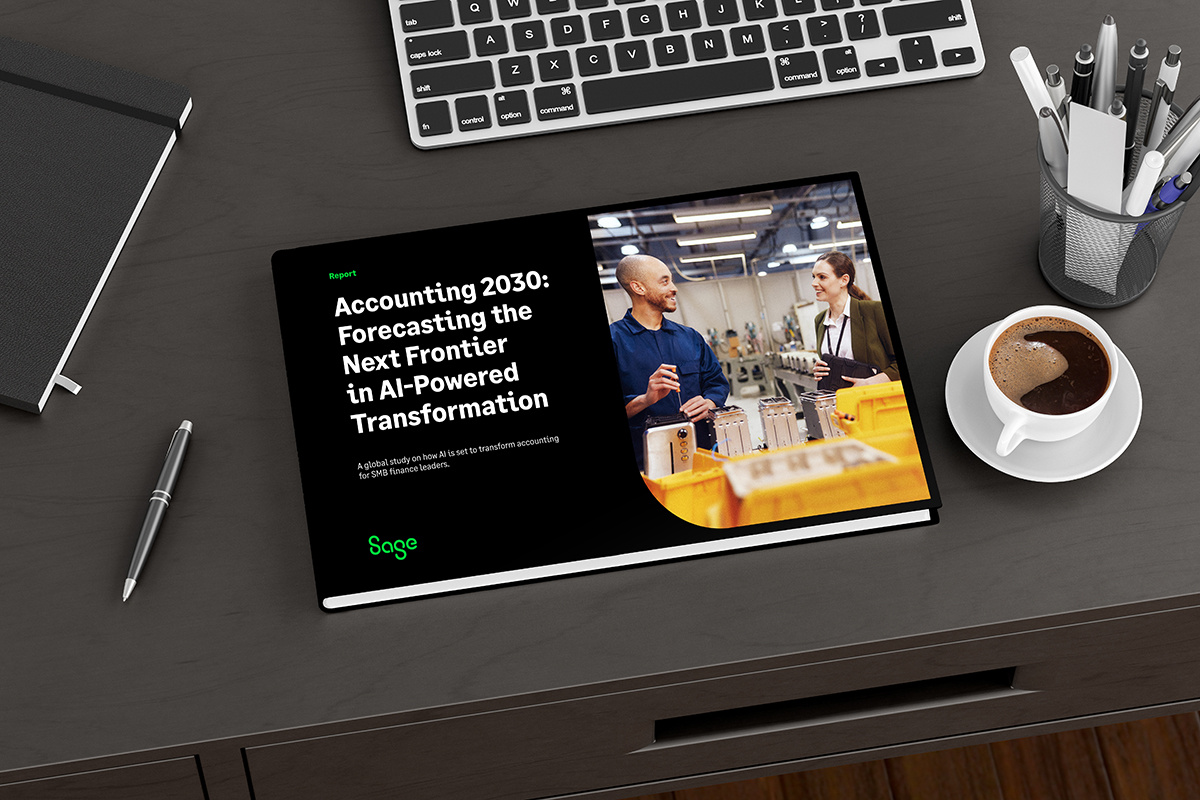
The accounting industry as we know it is on the brink of a major shift driven by the rapid integration of AI. As we look to the future, AI is poised to redefine the role of accountants. Rather than performing traditional bookkeeping and financial reporting tasks, accounting professionals will become strategic advisors who drive business growth.
Sage partnered with Forrester Consulting to conduct a study of over 2,300 accounting decision-makers in SMBs across the globe. With this research, we are bringing you five main predictions for a big-picture look at how AI will impact accounting in SMBs in the years to come.